
Going Native
Writing thrutopias 5

Are you native or tourist?
The tourist looks for sensation and entertainment, amenities, selfies and the right number of beds. The tourist takes and leaves. There’s no emotional commitment. It’s a hook up.
The native respects and protects the source of their own sustenance. The native gives and takes and stays. The native forms a long term committed relationship. Ideally there is love.
The tourist may fall into a deeper relationship with place. Repeat visits and emotional investment mean you’ve crossed over. You’re semi-native. It could be that you don’t feel a deep connection to your hometown. It isn’t automatic. You know the place you are born to when you get there. You sink your umbilical and nourishment flows.
There are scales of native sentiment: locale, region, country, planet. Native sentiment is not defensive patriotism or border-focused othering. At all scales it is recognition, affinity and bonding with the deep character of place. Where this relationality exists humans can live as keystone species. A minority still do.
Historically, when we carelessly extract like tourists, often in conjunction with climate issues, civilisations collapse. This is our current course, but the techno-prophets are taking tourism to new levels of dismissal. Investors and technologists speak with adolescent glee about tiling the Earth with data centres and dismantling Venus, giddy fan boys over max dominion and CapEx trillions.
I.Solas on Jiang Xuequin’s analysis:
the collapse of material certainty produces a spiritual vacuum, and that vacuum is being moved into by what he calls techno-prophets — figures positioning themselves for post-material spiritual authority. He names Elon Musk and Peter Thiel as the two clearest examples (...) they treat the body, the soil, the species, and the planet as things to be transcended rather than belonged to.
Elon and Peter, just know you are native Martians and we would like to help you pack.
It doesn’t have to be like this. Tech can serve the native project. Dominion and the current form of money wobble atop. They have no roots.
Annette Naber, in her book Seasons of a Wild Life, counsels: ‘apprentice yourself to whatever environment you find yourself in,’ and ‘allow yourself to be nourished, enchanted, and more rooted by the place you inhabit.’
Nature gifts us 3.8bn years of open source R & D. Human tourists disregard for a graceless, gimme, grabfest. It’s cringe. The new native is well-meaning but prone to blunder. Take time to listen. Attend to your apprenticeship.
Biomimicry is part of that apprenticeship. The range and depth of applications is humbling and inspiring and now extends beyond engineering and architecture into social innovation.
Bill Plotkin writes of coming to know our own soul as a unique eco-niche with a mythopoetic identity.
We discover (or remember) our innate place, our true home, when the world mirrors it to us by way of nature-based metaphors, human archetypes, or other mythic or poetic images or symbols.
When Plotkin refers to niche he means ‘a thing’s unique set of relationships with every other thing in its ecosystem.’ Once you find your fit you can begin to fully embody your function.
You may well have an alternative conception of soul, but the ecological perspective is valuable.
Nets of place, people and purpose belong in the thrutopian narrative. It is thrutopian to examine what draws you and holds you in your niche. When more of us come out, name, acknowledge and normalise relationship with place, it becomes an expectation, as key to wellbeing as friends and family. Match-making, soul to place and implementing our care benefits the individual and the whole.
Here’s how I matched with Somerset.
I was born in an English mining village in the midlands, DH Lawrence country: buildings blackened with coal dust, scarred lungs, hard labour, weekly pay packets and weekend beer-soaked carnage. My mother’s family appears in church records from the 16th century but I am not native. I did not fit.
I belong in the west. I arrived on the Somerset coast aged 18, stepped off the vintage steam train (it would be wouldn’t it, meeting not parting in the steam) and thought home.
The local hippies adopted me. They took me to the House of Cats on the hill overlooking the sea. It was lit by candles in brackets. The walls were painted with pictures of Adam and Eve, serpents and symbols. Jars of magic mushrooms lined the shelves. I thought I was wearing snowshoes; it was the grid of my fishnet stockings under my feet. Captain Beefheart played. Philip the shaman had black and gold labs called Bilbo and Frodo. Sara, I swear, was a pixie. Men with lean torsos crafted roll ups. I sat on a balcony with my legs through the spindles watching the sunrise, straddling grounded north and trippy ancient west. I chose west. Not because of the hippies, because of the vapour passing through the house.
I can’t name it. It came out of the ground and all that was living on it. It was softer and greener than the north and older and newer, and the tipping point of drunk. If I had to choose one symbol for it, it would be the cider apple.
Also in my bag of Somerset talismans:
Place names, Stogumber, Barrow Gurney, Curry Rivel, Hewish Champflower.
The hanks of black cobwebs inside Wilkins cider barn. Wilkins himself is simply himself and has been so forever. As you enter cloudy liquid is placed in your hand. Paying is parenthetical (take the details and do it when you get home if you like). Don’t detract from the moment. What matters is the scrumpy, that long-time essence of tap room conviviality.
The myths: Avalon, King Arthur, the Holy Grail.
The walkable scale. Villages, small towns, the tiny city of Wells, mere steps away from open country.
The Pagan mystical meld. It’s not in anything that must be paid for, the commodified witchery of Glastonbury High Street, crystals, candles, drums, incense, potions, therapists and therapised. It may be there in the chanting behind that hedge and the naked bathers in the dark enclosure of the White Spring. It’s there in the window seat of the library of Avalon and the gnarled orchard on the slopes of the Tor.
The green. Why have astronauts not commented? In spring the greenest green on Earth. Sorry, Ireland.
Psychedelics. Liberty caps abound. Trans-dimensional portals between cow pats is very Somerset. I have tested but I prefer the intoxication of creativity and nature.
Samuel Taylor Coleridge is our poet. Wordsworth also lived here for a while but he is native to lakes and high places. This is Kubla Khan country, gorges and caverns.
Visit the tourist honey pot of Coleridge’s cottage in Nether Stowey and see how it takes you.
Beams above and flags underfoot. Tourists slow shuffling, surface scanning where he ate, wrote, slept and made love.
There’s a vial of laudanum on the shelf of his writing room. Pause. Out swim sacred rivers, ectoplasmic ancient mariners and damsels bright. A poet’s mind bathed in the juice of poppies, ‘for he on honeydew hath fed and drunk the milk of paradise.’
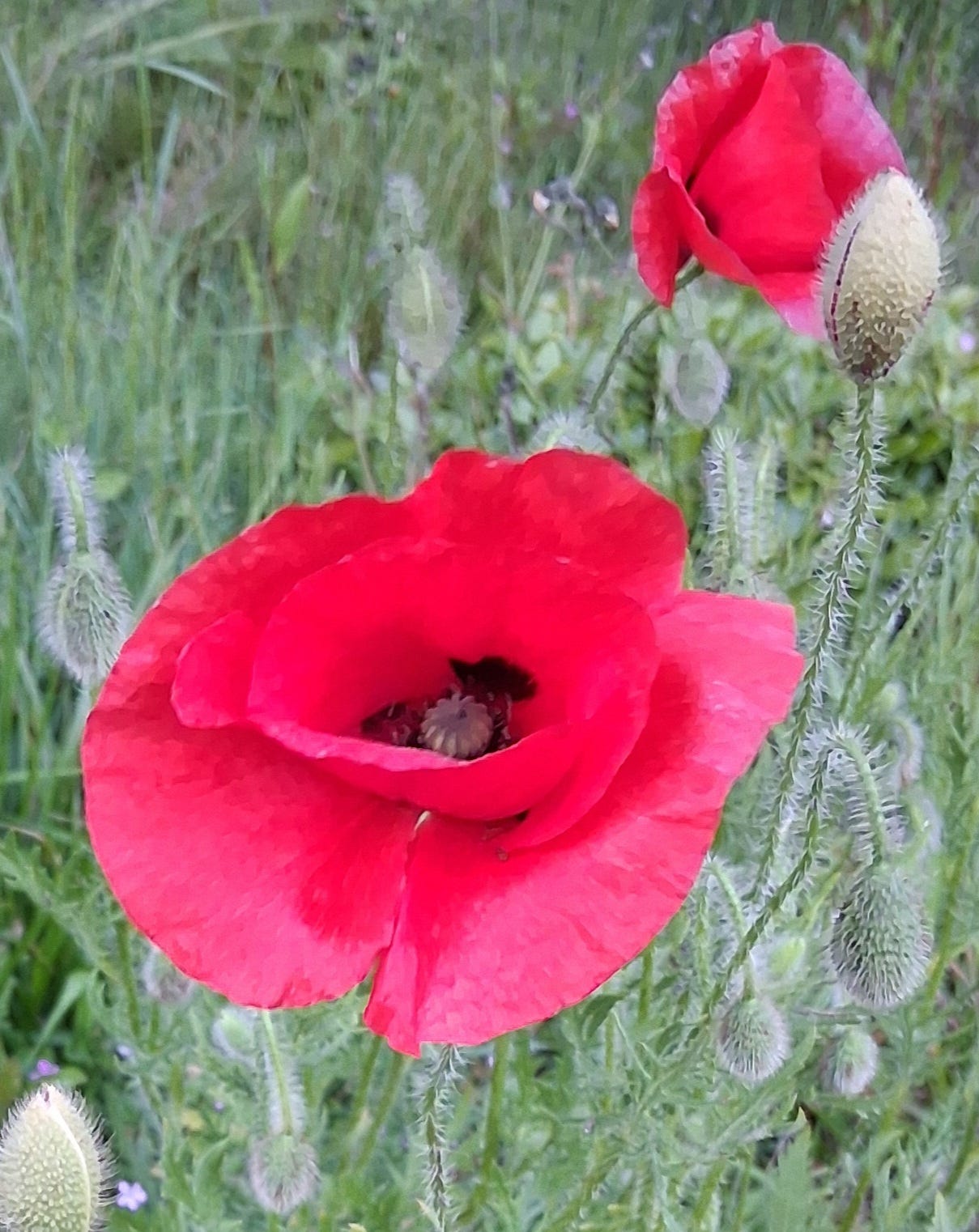
The tourists move politely on.
The well has a cool, plinky magic. A brick-lined tunnel with the mystery of lakes; what lies in the depths? ‘Beware, beware, his flashing eyes, his floating hair.’
There is a cafeteria. People are public-eating, slow-buttering scones, pouring tea with fingers on the lid, saying that things are ‘nice’ or ‘lovely’.
Leave the cottage, eat under a crooked tree among the heather, fern and gorse. Walk through woods to Bin Combe. Here he wrote ‘Nature! Sweet Nurse! O take me in thy lap - And tell me of my Father.’
Or sip tea, visit the National Trust gift shop, stay safe where this is ‘nice’ and that is ‘lovely’.
Invited to sign the visitor’s book with a scratchy bleeding quill, what will you say of mystical chasms and unmoored imagination? I felt it or I felt it not?
No judgement. Possibly you lean east. I was in Sutton Hoo last month listening to nightingales. It’s where they found the burial hoard of King Raedwald (inspo for the film, The Dig). I felt benevolent but detached, a tourist. The buried energy is martial. On this island invasions happen from the east. There is battle in the ground.
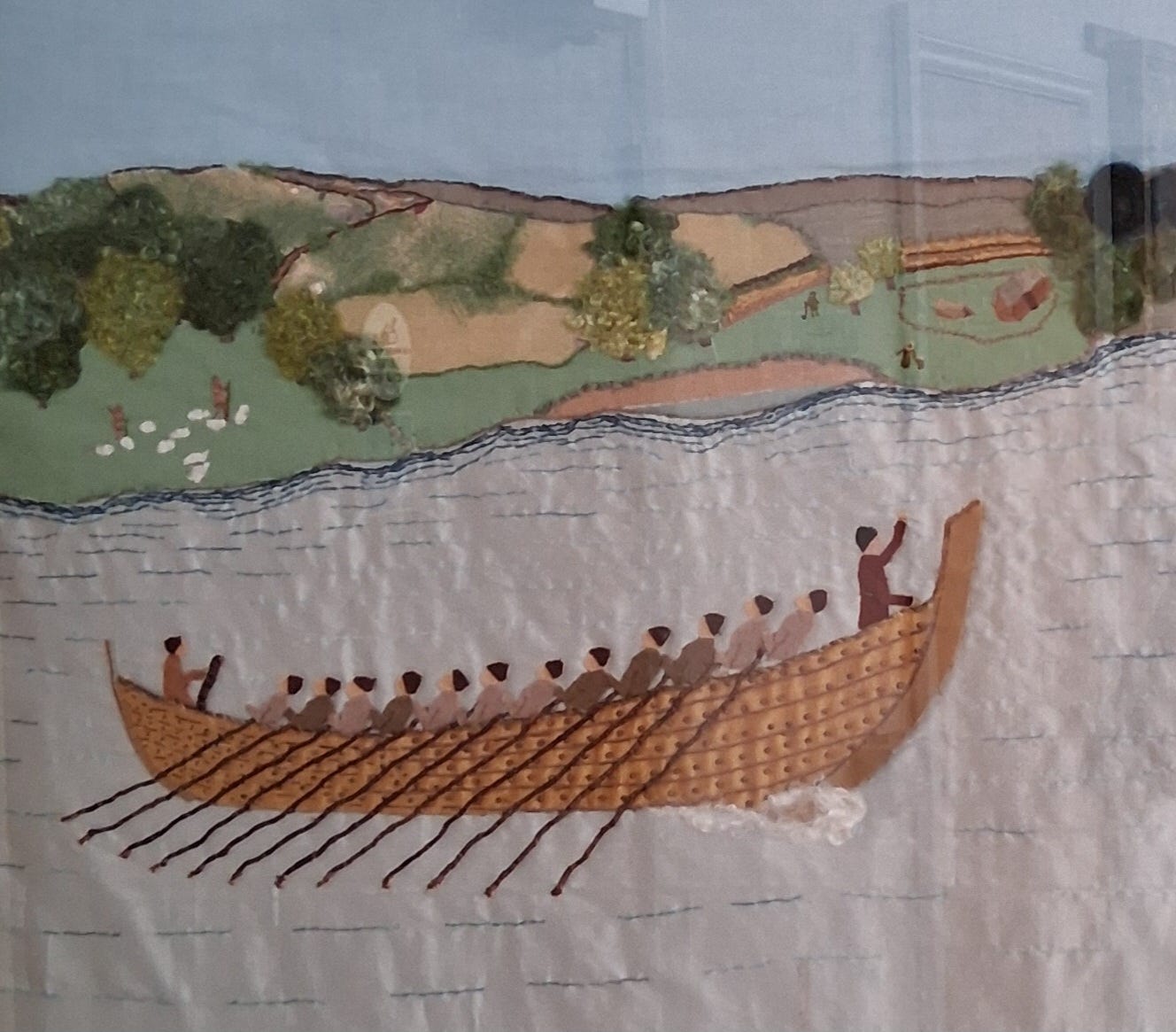
We were listening to birdsong in the dusk of Sutton Hoo because my daughter has become an avid bird-watcher, part of a dramatic surge in the hobby among the young. This is hopeful. She wouldn’t protest against airport expansion on grounds of emissions, but she would enthusiastically labour to improve the habitat of the Dartford Warbler. This is care manifesting at a visceral level. Emissions are intangible, diffuse. Bird-watching is a route to becoming native to wide swathes of nature. Deep attention carries us over the threshold to love.
Where do you live and how are you living? Native or tourist?